Collaborative Puzzling: How Team Puzzle Solving Builds Social Bonding
Explore the social benefits of collaborative puzzling. Learn how solving jigsaw puzzles together builds communication, empathy, and workplace trust.
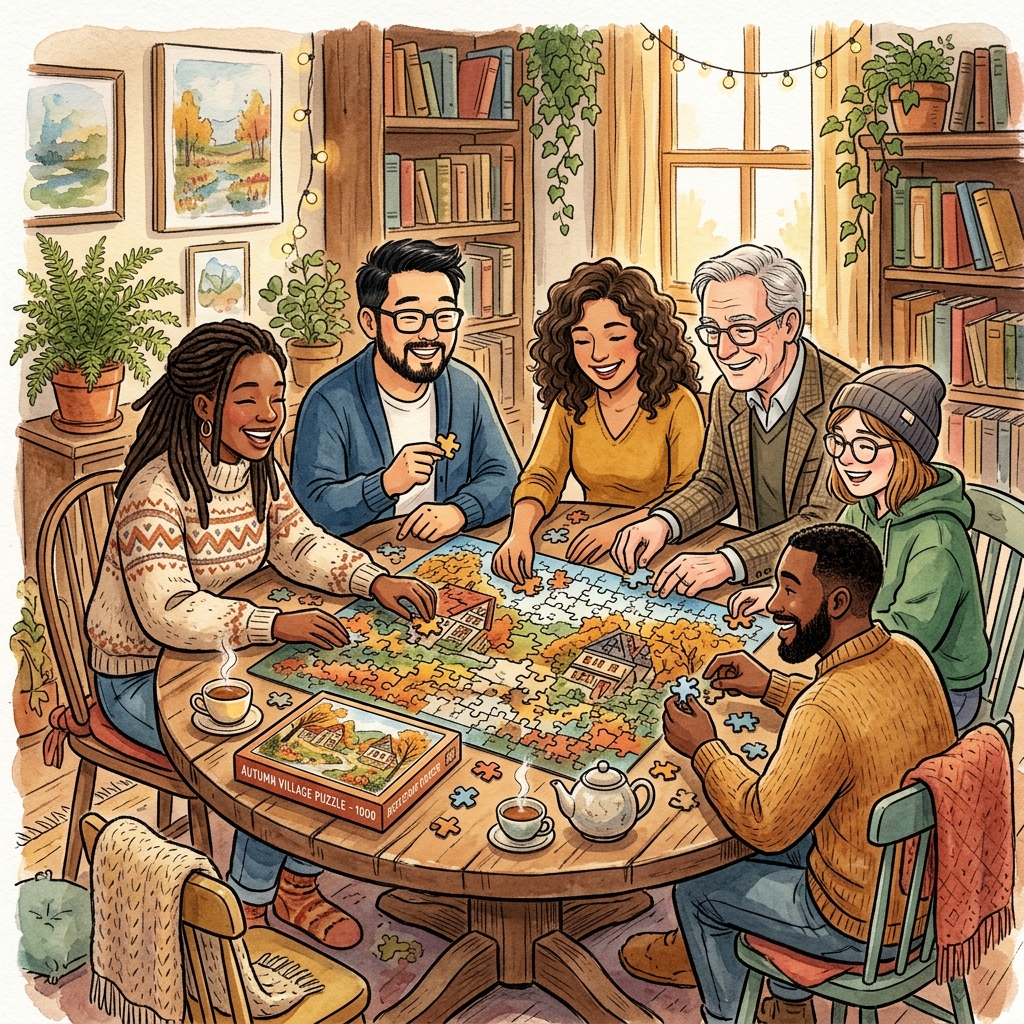
In a modern society increasingly characterized by individual screens and digital isolation, finding low-pressure, screen-free collaborative activities is more important than ever. Whether at home with family or in the office with colleagues, building strong social bonds requires shared experiences that encourage communication without the stress of competitive performance.
Jigsaw puzzles are historically viewed as a quiet, solitary hobby. However, when solved in groups, they transform into a powerful tool for collaborative play, team building, and social connection.
Engaging in jigsaw puzzles online or around a physical table removes social anxiety, lowers conversational barriers, and helps build empathy and mutual trust.
1. Lowering Conversational Barriers and Easing Social Anxiety
For many people, direct eye contact and face-to-face conversation can trigger mild social anxiety, especially in team-building settings or new social groups.
Puzzles solve this challenge by providing a shared focal point:
- Side-by-Side Interaction: Instead of looking directly at each other, participants look down at the puzzle board. This physical orientation reduces social pressure.
- Natural Conversational Pacing: The shared activity allows for comfortable silences. People can chat casually, pause to search for a piece, and resume speaking without the awkwardness of a quiet dinner table.
- Low-Stress Collaboration: Because there are no "wrong answers" or competitive targets, conversations flow naturally, allowing participants to share personal stories and connect on a deeper level.
2. Encouraging Cooperative Communication Patterns
Solving a puzzle in a group requires team members to coordinate their efforts. Without formal instructions, participants naturally divide tasks and establish communication workflows:
- Workflow Definition: One person might take charge of sorting border pieces, another groups color blocks, and a third works on a detailed sub-assembly landmark.
- Negotiation & Alignment: Participants must discuss strategies: "Should we finish the sky first or assemble the house border?"
- Active Helping: Asking for assistance or sharing pieces ("Here is a red tab piece that belongs to your window section") fosters a culture of mutual support.
These cooperative patterns mimic professional project management and teach children and adults how to listen, negotiate, and collaborate towards a shared goal.
3. Building Workplace Trust and Team Dynamics
In corporate settings, team-building exercises are often met with skepticism or viewed as forced socialization. Jigsaw puzzles offer a calm, authentic alternative.
In a workplace study on team dynamics, groups that worked on a joint puzzle task demonstrated higher levels of empathy, active listening, and collective intelligence. Puzzles equalize hierarchy; managers and interns work side-by-side as peers, focusing entirely on spatial matching.
Connecting puzzle pieces builds a shared sense of accomplishment. Celebrating small breakthroughs together—like finding a long-sought corner piece—creates positive feedback loops that strengthen workplace relationships and build trust.
Competitive Team Building vs. Collaborative Puzzling
Compare how competitive activities compare to puzzles in building group dynamics:
| Metric | Competitive Activities (e.g. Trivia, Sports) | Collaborative Puzzling |
|---|---|---|
| Social Stress | High (winners and losers) | Zero (shared cooperative goal) |
| Participation | Often dominated by extroverts | Equal participation for introverts and extroverts |
| Communication Style | Fast, high-pressure | Calm, slow-burn, organic conversation |
| Relationship Impact | Can cause rivalry | Builds empathy, trust, and alignment |
| Workplace Transition | Focuses on individual performance | Focuses on collective problem-solving |
Tips for Planning a Collaborative Puzzle Session
To set up a successful group puzzling experience, follow these guidelines:
- Choose the Right Scale: For groups of 3 to 5 people, a 200 to 400-piece board is ideal. It provides enough complexity to keep everyone engaged without dragging the session out for days.
- Set the Mood: Play soft, instrumental music in the background and set up comfortable seating around the table.
- Host a Virtual Puzzle Hour: If your team works remotely, set up a collaborative digital room. Solving daily jigsaw puzzles together during a video call is a great way to start a meeting with a low-stress visual warm-up.
- Create a Puzzle Corner: In office common areas or family living rooms, leave a half-finished board on a side table. Invite people to drop in, place a few cozy jigsaw puzzles pieces during breaks, and drift away. It creates a natural, low-pressure gathering point.
Ready to Train Your Brain?
Experience the therapeutic focus of jigsaw puzzles. Play our curated daily boards or upload your own photo instantly.