The Future of Digital Jigsaw Puzzles: How AI is Changing the Game
Explore the evolution of digital puzzles, how generative AI is creating personalized puzzle art, and the pros and cons of online versus physical boards.
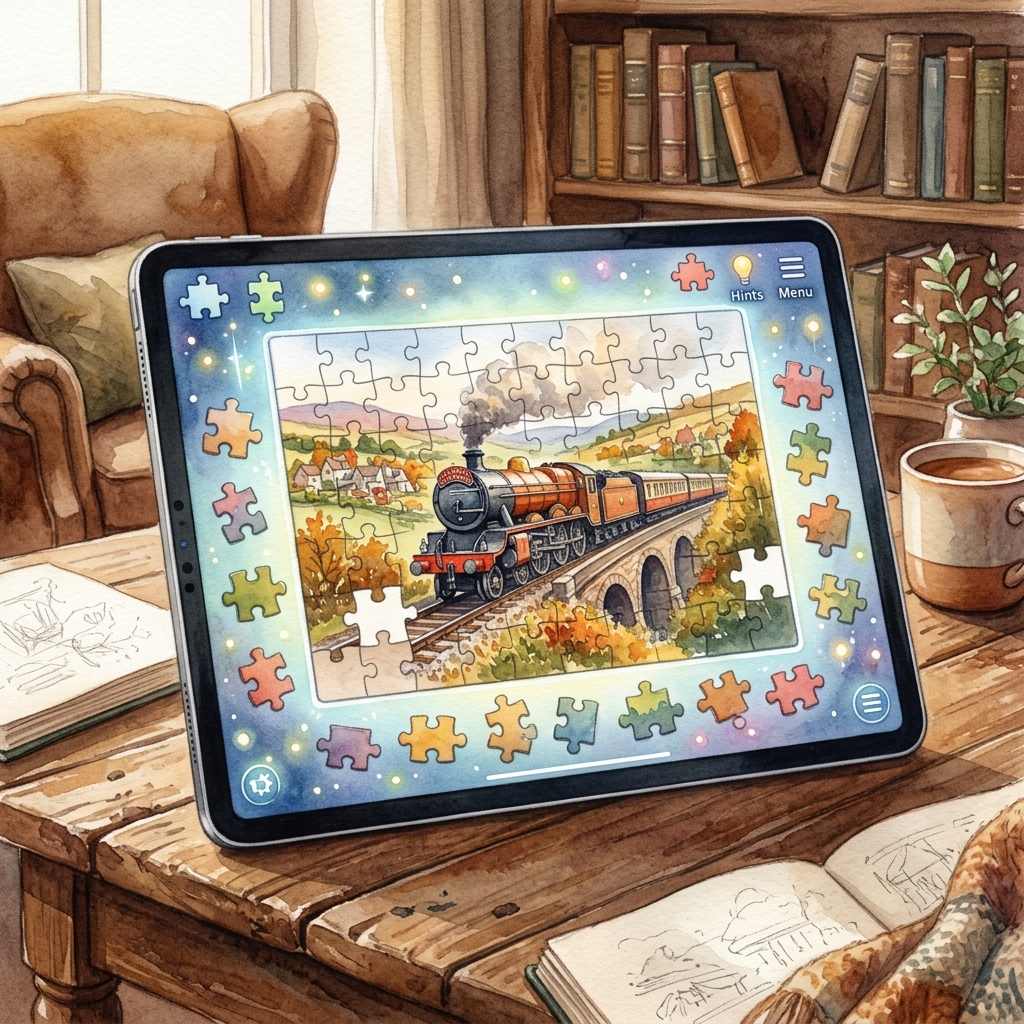
Jigsaw puzzles have been a beloved cognitive pastime since the 1760s, when cartographer John Spilsbury first glued a map of England onto a sheet of wood and carved it into pieces to teach geography to school children.
While the core mechanical joy of interlocking shapes remains unchanged for over 260 years, the medium is undergoing its most radical transformation. Today, modern web frameworks, WebGL rendering engines, and generative artificial intelligence are transforming puzzles from a static, physical product into a dynamic, personalized digital art form.
Here is a deep look at how technology and generative AI are shaping the future of digital puzzling.
The Shift from Physical to Digital: Solving the Clutter
Are online jigsaw puzzles as good as physical ones?
Online jigsaw puzzles offer significant advantages over physical boards: they cost nothing, require zero physical storage space, save progress automatically, and let you instantly toggle between 36 and 400 pieces without buying a new box.
For many fans, physical puzzles present significant logistical challenges. They require a dedicated dining table or assembly board that remains cluttered for days or weeks. There is also the constant, frustrating risk of losing a single cardboard piece, rendering a 1,000-piece board incomplete.
Digital platforms solve these challenges. By moving the board to the cloud, players can engage in short 5-minute sessions on their smartphones during commutes, or deep sessions on high-resolution tablets in bed, with zero clean-up or lost pieces.
How Generative AI is Revolutionizing Jigsaw Art
For decades, digital puzzle games suffered from a major limitation: static, uninspiring catalogs. Players were forced to solve the same generic stock photos of castles, baskets of kittens, and hot air balloons over Cappadocia.
Generative AI has completely broken this creative bottleneck. Here is how:
1. Style Diversity and Art-Driven Design
Rather than relying on stock photography, platforms like PlayJigsaw leverage custom-trained AI generators to render highly stylized, whimsical illustrations. These scenes feature rich colors, detailed textures, and layered layouts specifically designed to make sorting engaging.
2. Gameplay-Optimized Compositions
Traditional stock photography often contains large areas of flat colors (like a clear blue sky) or blurry backgrounds (bokeh). While aesthetically pleasing in a photograph, these areas make for frustrating, trial-and-error gameplay.
AI-generated puzzle art is designed with intentional landmarks, color gradients, and textures distributed across the canvas. A sky is rendered with subtle clouds, stars, or color transitions, ensuring that every piece contains unique visual clues.
3. Turning Personal Ideas Into Custom Puzzles
AI allows players to turn their own thoughts or photos into puzzles instantly. By using our tool to upload custom photos to the platform, the backend automatically divides the image into a clean interlocking grid, giving you a custom board in seconds.
Under the Hood: The Technology of Digital Puzzles
Creating a smooth digital puzzle experience requires complex web technology. Rendering 400 interlocking vector shapes and allowing users to drag, rotate, and snap them in real-time requires hardware acceleration:
- HTML5 Canvas & WebGL: Modern platforms render pieces using WebGL to ensure smooth 60fps drag-and-drop interactions, even on older mobile devices.
- Collision Detection Algorithms: When a piece is dragged close to its correct neighbor, real-time collision detection triggers a satisfying "snap" and groups the pieces together, allowing them to be moved as a single unit.
- State Persistence (LocalStorage & IndexedDB): Players can close their browser window mid-game. The platform automatically saves the coordinates of every piece locally, letting you resume your session instantly.
Physical Cardboard Puzzles vs. AI-Powered Digital Puzzles
To summarize the differences, look at how the physical and digital formats compare across key categories:
| Feature | Physical Cardboard Puzzles | AI-Powered Digital Puzzles |
|---|---|---|
| Storage & Clutter | Takes up large table space for days | Zero physical footprint |
| Asset Preservation | Pieces easily lost or damaged | Cloud-saved progress, zero lost pieces |
| Catalog Variety | Limited to purchased boxes | Infinite AI-generated and custom boards |
| Adaptive Difficulty | Fixed piece count (e.g. 500 pcs) | Scale from 36 to 400 pieces on the fly |
| Cost | $15 - $30 per puzzle | 100% Free |
Experience the Future of Puzzles
The digital puzzle board is no longer just a digital copy of its cardboard predecessor. It is an interactive canvas that adapts to your screen, your schedule, your skill level, and your personal tastes.
- Try playing the free AI-generated art puzzles collection to see how detailed illustrations translate onto the board.
- Or, upload a personal photo and challenge yourself by slicing it into 400 pieces!
Ready to Train Your Brain?
Experience the therapeutic focus of jigsaw puzzles. Play our curated daily boards or upload your own photo instantly.